Some links on this page are affiliate links. If you book or buy through them, we may earn a small commission at no extra cost to you. It never changes what we recommend — every price here is one we would pay ourselves.
A hostel bed in Paracas, Peru, with a pool, cost $15 a night. What separates a $12 bed from a $40 bed is almost never the mattress.
A hostel bed in Paracas, Peru, with a pool, cost $15 a night. That is the number to hold onto while reading the rest of this. Paracas itself is a small coastal town on the way south from Lima, mostly known for the boat trip out to the Ballestas Islands, and the hostels there sit a few streets back from a waterfront where pelicans argue over the fishing boats. The pool is not a resort pool. It is a small courtyard basin with a few plastic loungers, and it is worth every cent of that $15 after a morning of salt spray and guano smells on the islands.
Prices for dorm beds swing wildly depending on where you are and what you get for it. In Edinburgh, a four-person room at CODE Hostel came with a reading light on each bed and a clean bathroom. The space was reasonable. That is the baseline: a bed, a light, a bathroom that gets cleaned. Everything above that is a bonus you are paying for. What separates a $12 bed from a $40 bed is almost never the mattress. It is the location, the season, whether the building has been renovated in the last decade, and whether a bar downstairs keeps the whole place humming until two in the morning.
What You Pay For
A private hotel night and campground fees on a trip will run about $432 on top of whatever you have already budgeted. That figure assumes you are camping most nights and only breaking for one hotel. It climbs from there depending on which campgrounds you pick. In popular national parks, the sites that take reservations fill months ahead, and the walk-in sites that remain are the ones without shade, without a flat pitch, and with a long walk to the water tap. Turning up at four in the afternoon hoping for the best is how that number gets bigger.
Night trains sit in a different category. The Chiang Mai to Bangkok route takes 11 to 14 hours and costs about $25. That is a bed, a window, and a night of accommodation rolled into one ticket. The Paris-Vienna sleeper reopened in 2024, which puts a second long overnight option back on the map for anyone moving between western and central Europe. On the Thai service, the seats fold into flat bunks in the evening and fold back into seats in the morning, and the attendant makes up each bed with a sheet, a pillow and a blanket while you wait in the dining car. Book the lower bunk if you can. The upper one is fine until the carriage starts rocking, and the ladder is a negotiation in the dark.
Package deals exist too. Three nights with breakfast in a four-star hotel plus a ski pass came to about $262 per person in savings. That is not a dorm bed. It is also not nothing. Ski towns are the clearest example of supply and demand in hostel pricing: the same bunk that goes for a modest sum in July can triple in February, and the lockers fill with boots instead of backpacks.
The gap between the cheapest and most expensive bed in the same city can be $18, $55 and $185 for the same seat. Same mattress, same pillow, different postcode, different season, different building. A bed near the main station costs more than one three tram stops out, and the difference is usually a fifteen-minute walk. A bed during a festival costs more than the same bed the following week, and in some cities the booking platforms quietly raise the nightly rate as the date gets closer and the remaining beds get fewer.
The Room You Are Actually In
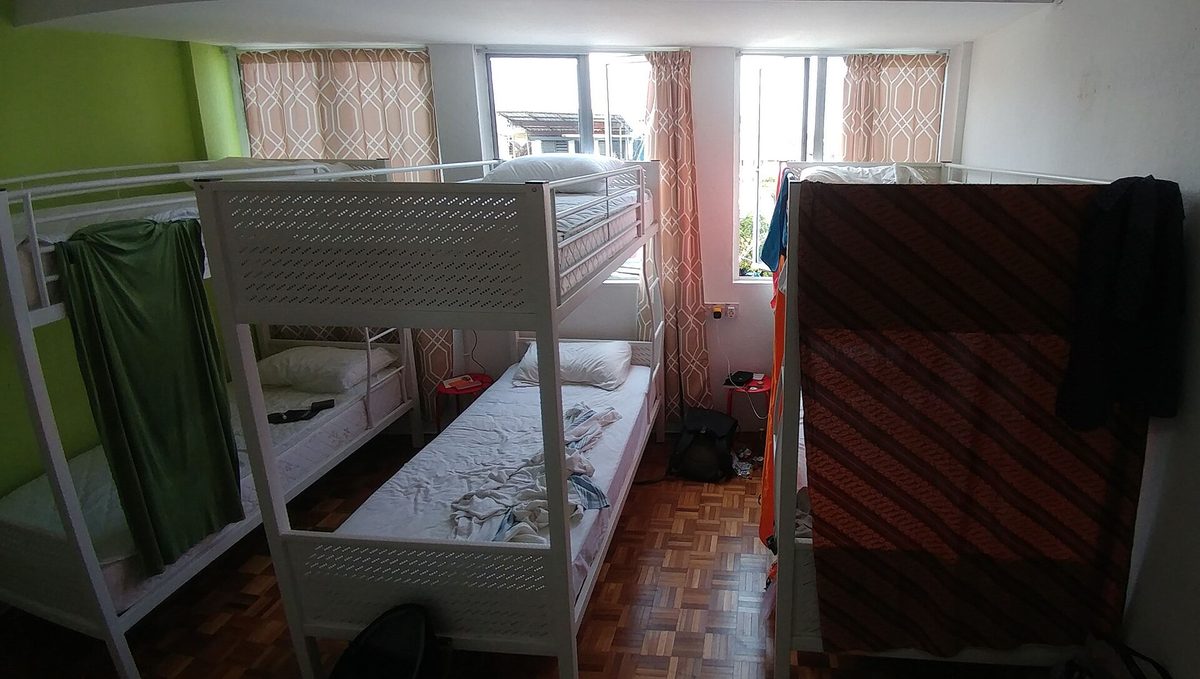
Hostels are not hotels with smaller rooms. They are a different model. Hotels give you single, double and triple rooms. Hostels give you rooms where 10, 11, 12 or more people sleep in bunk beds. The collective arrangement is the point, not a compromise. A twelve-bed dorm typically has six bunks stacked three high along one wall, which means the person on the top tier is climbing past two strangers to reach their pillow, and the person on the bottom is the one everyone steps on when they get down.
That matters for how you behave in the room. Set an alarm in the morning, but turn it off straight away. If you have an early start, pack your bag the night before, get ready in the bathroom, grab your bag and leave with as little noise as possible. Twenty people trying to sleep through your 5am departure is twenty people who will remember it. The other unwritten rule is the plastic bag. Rustling a bag at midnight is the single loudest sound in a dorm, louder than the door, louder than a phone alarm. Repack before bed, or accept the consequences.
Towels are the other thing nobody warns you about. Some hostels provide one. Some charge extra. Some do not have the option at all. A small travel towel that dries quickly solves the problem, even if it feels like drying yourself with an infomercial product. The same goes for padlocks. Many hostels have lockers under the beds, but the padlock is almost never included, and the front desk either sells one at a markup or sends you to a shop around the corner.

Meeting People
The dorm is where you sleep. The common areas and organised events are where you actually meet anyone. That distinction matters if you are travelling alone and expecting the bunk above you to become a friend. It might. It usually will not. The kitchen, the bar, the walking tour, the group dinner — that is where conversations start. In practice, the free walking tour is the most reliable icebreaker, because everyone has already agreed to spend two hours doing the same thing, and the guide usually ends it near a bar.
For the big attractions, buying tickets in advance skips the worst of the queues.
The kitchen tells you a lot about a hostel. A real kitchen has a shelf of abandoned food — rice, pasta, half a bottle of oil, a jar of someone’s spice mix — left by people who moved on. Cooking there is the cheapest way to eat, and it is also how you end up sharing a table with people you did not plan to meet.
Volunteering at a hostel is a separate question. It makes sense in two situations: as a vacation from vacation, to switch off somewhere and do something different, or to learn a language by staying in one place. Neither of those is the same as wanting free accommodation. If you are doing it for the bed, you will probably resent the hours. The typical arrangement is a few hours a day of cleaning, reception or bar work in exchange for a bed, sometimes breakfast, rarely anything else. The shifts are real shifts. The hostel is not doing you a favour, and the deal only works if both sides get what they wanted.
The Real Range
A pool in Paracas for $15. A clean four-bed room in Edinburgh with individual reading lights. A night train across Thailand for $25. A $432 buffer for the hotel night and campground fees you did not plan for. A ski package that saves $262 per person. The dorm bed is rarely the expensive part. The expensive part is everything you did not account for — the towel you had to buy, the night you could not face another bunk and booked a room, the train you took instead of the bus because it saved you a night’s accommodation. Budget for the bed. Budget harder for the rest.
Leave a Reply