Some links on this page are affiliate links. If you book or buy through them, we may earn a small commission at no extra cost to you. It never changes what we recommend — every price here is one we would pay ourselves.
Hold that figure next to Tajikistan’s $1 meals and $10 beds and you can see why the Pamirs keep pulling people back.
The $12 a Day Country
Tajikistan does not come up much in budget travel conversations, which is strange given what it costs once you are there. The numbers from travellers who have done the long haul are almost hard to believe: $1 meals, $10 hotels, river-boat journeys through the world’s largest delta. That is the floor, not the average, and tourism infrastructure is thin, but for seasoned travellers the value is unmatched.
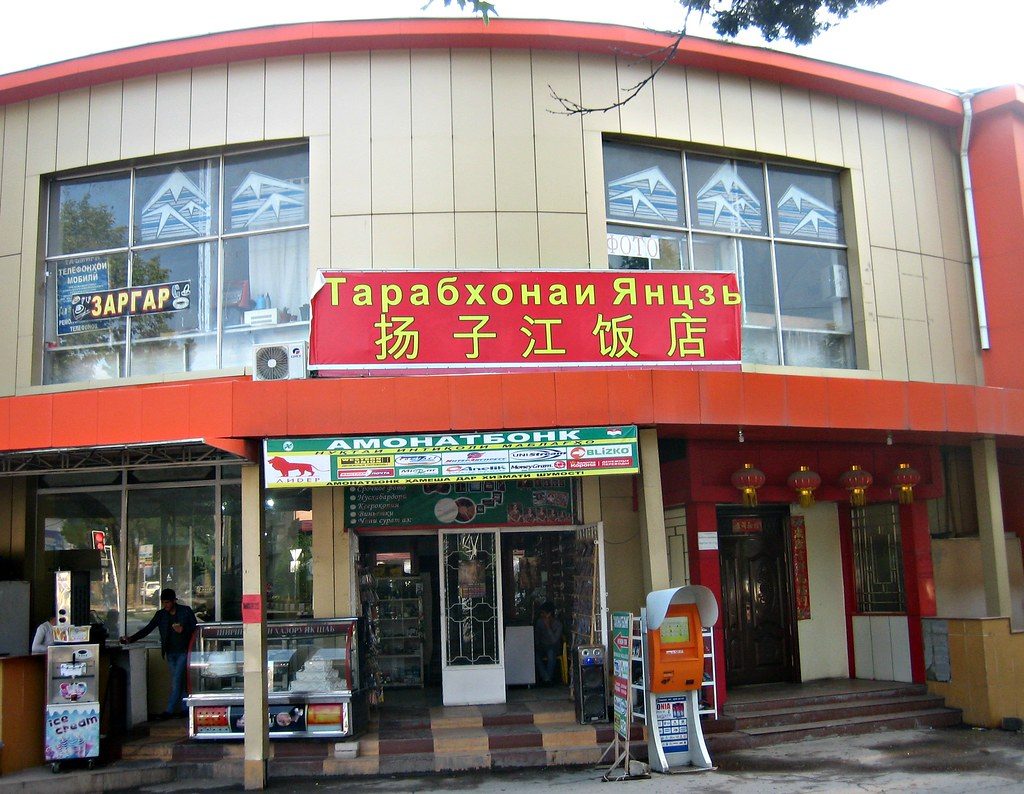
The $1 meal is usually plov — rice cooked in a kazan with mutton and carrots, served with a few slices of raw onion and a glass of green tea — and it is what most of the country eats at lunch. The $10 hotel is a guesthouse room with a bed, a blanket, a shared bathroom down the hall and a jug of hot water that appears at a fixed hour in the evening. Neither is a tourist price. Both are simply the going rate, which is why they hold up outside the capital as well as inside it.
Set that against what a comparable stretch of travel costs elsewhere and the gap gets wider. A 12-day road trip through Georgia and Armenia ran €3,630, which is $4,250 for two people. Divide it out and you are looking at roughly $177 per person per day, and that is in the cheaper half of the Caucasus. Guatemala, which most people file under “affordable,” comes in at a realistic $50 per day. Even a shoestring run through Chile — the kind where you count everything — landed at CLP 653,600 over 82 days, or $979.50 total, which works out to $11.95 per person per day including all food, transport and other expenses. Hold that figure next to Tajikistan’s $1 meals and $10 beds and you can see why the Pamirs keep pulling people back.
If the good parts are far apart, renting for a few days is the sensible spend.
What the Money Actually Buys
The fixed costs are the thing nobody mentions. Getting into the country, getting a vehicle, getting a permit for the high passes — that is where the money goes. Some travellers have 4x4s at $10,000, and that is the most expensive and most variable line in any Tajik budget. Once you own the transport problem, the daily spend collapses. Backpackers leave with almost no initial fixed costs, which is why the per-day figures look the way they do.
Two permits sit behind most Pamirs itineraries: the GBAO permit, which covers the Gorno-Badakhshan Autonomous Region and is checked at checkpoints along the M41, and a border permit if the route clips into a neighbouring country. The GBAO paperwork is normally arranged in Dushanbe or Khorog before departure, and the queue at the office moves slowly, so a morning set aside for it is not wasted. Photocopies of the passport and the visa page are expected, and the clerk will want a small fee in local currency rather than a card. Beyond that, the daily costs are fuel, food and the small sums handed over for a homestay bed.
Compare that to a beachfront villa in Seminyak or Uluwatu at $150 to $500 a night, or fine dining at places like Locavore or Mozaic at $60 to $120 per person. A private boat charter to Nusa Penida or the Gili Islands adds $100 to $300 a day on top. Tajikistan does not have that tier at all. It has $10 beds and $1 plates and not much in between.
The Europe Comparison
It helps to anchor this against somewhere people already know. A beer in Prague might be €2 to €3. The same beer in Oslo runs €8 to €10. That is a three to four times difference on a common item, and it is the cleanest illustration of how far a budget stretches depending on where you stand.
Portugal sits 12 to 18 percent below its neighbours across accommodation, food and activities, and the gap is largest in accommodation, especially comparing Porto to Barcelona. That is considered a serious bargain in European terms. Tajikistan is not operating on the same scale. It is not 15 percent cheaper than Portugal. It is a different category entirely, and the daily numbers make that plain.
The practical consequence is that the usual budgeting instinct — trim a little here, skip a museum there — does not apply. In Tajikistan the money goes in one lump at the start, for the vehicle and the permits, and after that the arithmetic is almost trivial. What actually runs out is not cash but time, because the distances between the good stretches are long and the roads are slow, so a day spent stationary costs far less than a day spent moving.
Where the Money Leaks
Two things will eat a Tajik budget faster than anything else. The first is transport, and the second is gear. A 4×4 at $10,000 is not an exaggeration for a serious overland setup, and it is the single line item that separates a $12 day from a $120 one. The other trap is booking through the wrong intermediary. Car rental disputes are common enough that one traveller ended up over €250 out of pocket — roughly $270 — and only got it back four months later on a goodwill refund after a fight. The lesson was straightforward: check who is actually behind the rental before you sign.
The disputes tend to follow a pattern. A vehicle is handed over without a written condition report, a scratch or a cracked light is noticed at drop-off, and the deposit is held against the repair. Photographs of the car on the day of collection, a signed sheet listing existing damage, and a clear note of who holds the deposit are the three things that keep the argument from happening at all. It is also worth establishing early whether the rental includes a driver, because self-drive arrangements in the mountains are treated differently from guided ones and the insurance rarely travels with the car.
Cruises offer a useful contrast here, because they look all-in and are not. A $3,600 fare excludes compulsory daily tips and onboard costs like alcohol, which can add hundreds over a week. Tajikistan’s costs are the opposite — almost nothing is hidden, because there is almost nothing to hide behind. You pay for the vehicle, the fuel, the permit, and then you pay $1 for dinner.
Who This Suits
This is not a destination for someone who wants a resort, a menu in English, and a shuttle from the airport. Tourism infrastructure is thin. That is the trade. What you get instead is arguably the lowest daily costs on earth outside a handful of places, and a country where the fixed costs are the whole conversation. Get past those and the numbers stop being remarkable and start being ridiculous. A $10 hotel and a $1 meal is not a budget hack. It is just what things cost.
What that means in practice is that the trip rewards people who are comfortable with a certain amount of improvisation. Buses leave when they are full rather than on a timetable, homestays are found by asking rather than by booking, and the guesthouse that was recommended last year may simply not be open this year. The compensation is that almost nothing is priced for visitors, so the budget holds even when the plan does not. Bring more time than money, and the country will use both of them well.
Leave a Reply